Disabled Shower Cubicles | More Ability
Published: 4 November 2025
A disabled shower cubicle offers a safe, comfortable, and stylish solution for people with limited mobility or accessibility needs. Designed to make bathing simple, dignified, and stress-free, these cubicles combine thoughtful features with a modern aesthetic to create a space that supports independence without compromising on style.
At More Ability, we understand that everyone’s needs are different. That’s why we specialise in designing and installing bespoke disability showers, accessible shower cubicles, and disabled wet rooms that make daily routines easier, safer, and more enjoyable for every individual.
Why Choose a Disabled Shower Cubicle
Choosing a disabled shower cubicle provides far more than just practicality — it’s about peace of mind, comfort, and confidence. These designs are created to reduce the risk of slips and falls by incorporating low or level-access entry and non-slip flooring, while grab rails and shower seats help users shower safely and independently.
Disabled shower cubicles are also ideal for homes where space is limited. Their flexible layouts make them easy to integrate into most bathrooms, often replacing an existing bath with minimal disruption. Installation is straightforward and efficient, and with a range of finishes available, accessibility doesn’t have to come at the expense of design.
For many people, choosing a disability shower represents a step toward maintaining independence at home for longer — a small change that can make a big difference to everyday life.

Key Features of a Disability Shower
A disability shower is designed with both functionality and comfort in mind. The level-access tray allows users to step or roll directly into the shower area without raised edges or steps, while wide-opening or half-height doors provide plenty of room for carer support if required.
Safety is central to the design and selection of accessible brassware. Grab rails can be fitted in key positions for stability and reassurance, and adjustable shower heads can be set to suit both seated and standing users. Thermostatic controls ensure consistent water temperature, reducing the risk of scalding, while emergency pull cords can also be installed for added peace of mind.
Together, these features, along with accessible sanitaryware or a bespoke wash and dry WC and floor and wall coverings, create a shower that promotes independence and safety while offering reassurance for both users and their loved ones.
Types of Disabled Shower Cubicles
There are several types of disabled shower cubicles available, each designed to suit different spaces, mobility needs, and personal preferences. Every installation is carefully planned to combine practicality, safety, and visual appeal.
Corner Shower Cubicles
For smaller bathrooms or en-suite spaces, corner shower cubicles are an excellent space-saving choice. These designs fit neatly into unused corners, making the most of available space without compromising accessibility. With wide, outward-opening doors and level-access trays, they allow easy entry while leaving room for mobility aids.

Recessed Shower Cubicles
Recessed shower cubicles are fitted between three walls, creating a sleek, built-in appearance. This design is ideal for narrow or rectangular rooms, providing a streamlined look that maximises floor space. Half-height or sliding doors can be added to make them suitable for assisted showering.

Three-Sided Shower Cubicles
Three-sided shower cubicles are perfect for larger bathrooms or those seeking maximum flexibility. Positioned against a single wall, this design features three surrounding panels to create a spacious and open showering area. The wide entry and adaptable layout make it suitable for users who rely on walking aids or carer assistance, and the finish can be tailored to complement any interior style.
Shower Pods or Self-Contained Shower Units
For a simple and efficient installation, shower pods or self-contained units provide a complete waterproof system that includes the tray, wall panels, and fixtures. These ready-made units minimise disruption during fitting and can still be adapted with grab rails, seating, and thermostatic controls for added safety and ease of use.
Disabled Wet Rooms – An Accessible Alternative
For some people, a disabled wet room can be an even more practical and versatile choice than a traditional shower cubicle. A wet room removes the need for a shower tray or enclosure, creating an open, fully waterproof space that is both modern and easy to access.
This style of bathroom is particularly beneficial for wheelchair users or anyone requiring carer assistance, as the continuous level floor allows for effortless movement throughout the room. The integrated drainage system ensures water flows away effectively, keeping the surface dry and safe.
A disabled wet room can include all the same supportive features as a shower cubicle, such as fold-down seating, grab rails, and thermostatic controls, while offering greater flexibility for future needs.
At More Ability, each wet room is designed with both functionality and style in mind, using slip-resistant flooring and contemporary finishes to create a space that feels safe, open, and elegant.
If you’re considering a wet room installation, you may find it helpful to read our related article Wet Room Ideas for Disabled People, which explores additional design inspiration, layout options, and accessibility features to consider when planning your own space.
Disability Shower Accessories
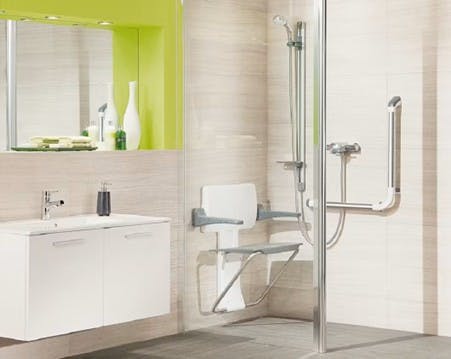
Accessories play an important role in turning a standard disability shower into a fully functional, user-friendly space. A fold-down seat offers support and can be tucked away when not needed, making it ideal for shared bathrooms.
Grab rails can be installed near entry points and seating areas for balance, and thermostatic devices maintain a steady water temperature to prevent scalding.
Practical additions such as accessible storage shelves, half-height screens or curtains, and emergency pull cords add extra convenience and reassurance. With these thoughtful details, each shower can be tailored to provide the right combination of safety, comfort, and independence.
Dimensions for Accessible Shower Cubicles
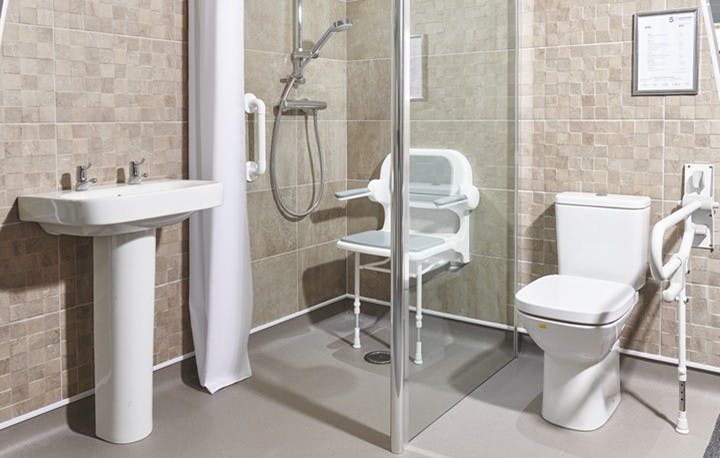
Getting the dimensions right is key to comfort, usability, and compliance. A well-planned shower ensures enough space for movement while maintaining a secure layout.
A disabled shower cubicle should ideally provide a minimum area of 1200mm by 1200mm, offering room for wheelchairs or walking aids. The door width should be at least 813mm to allow easy entry, while grab rails are best positioned between 800mm and 1000mm from the floor. Seating is generally installed around 480mm high to make sitting and standing more comfortable.
These guidelines can be adjusted to suit each user’s mobility needs and available space, ensuring the final design feels both safe and practical. For those planning a full bathroom renovation or looking to improve wheelchair accessibility throughout their home, our article How to Create a Wheelchair Accessible Bathroom offers further guidance on layouts, dimensions, and design considerations.

Choosing the Right Disabled Shower Cubicle
Choosing the right shower cubicle starts with understanding the needs of the person who will be using it. Some users may require a larger layout with carer access, while others may prefer a more compact and private design that supports full independence.
The layout of the bathroom will influence the best solution. A corner or recessed cubicle is perfect for small rooms, whereas a level-access area suits larger or wheelchair-friendly environments. The aesthetic of the room can also be personalised with modern wall panels, coordinated fittings, and carefully chosen finishes.
At More Ability, we believe accessibility should never mean sacrificing style. Our full design and fit service ensures every aspect of your bathroom is carefully planned, from layout and safety features to the overall look and feel. We create design solutions that reflect individual wants, needs, and specific disability requirements, helping you achieve a safe, functional, and beautifully finished space that perfectly suits your lifestyle.
Installing a Disabled Shower Enclosure
Having a disabled shower enclosure professionally installed guarantees that your bathroom is both safe and long-lasting. The process begins with a design consultation to assess mobility requirements and discuss the preferred layout and features.
Our team manages every stage of the project, from preparation and plumbing to waterproofing and final installation. Wall reinforcements are added where required for grab rails and seats, ensuring complete stability. Once fitted, the shower is tested thoroughly so that every detail meets the highest standard.
By managing the entire process from start to finish, we ensure each installation is smooth, efficient, and built to last.

Disabled Shower Cubicle Case Studies
Every disabled shower we design and fit as part of our fully managed service is centred around meeting the individual needs and preferences of the person using it.
Our case studies highlight real-life projects that show how practical design and careful planning can transform bathrooms into safe, accessible, and stylish spaces. One recent example is our wheelchair-accessible wet room transformation in Dewsbury, where a standard bathroom was converted into a fully accessible space complete with level-access flooring, supportive grab rails, and a comfortable fold-down seat.
These projects demonstrate how thoughtful design can make a genuine difference to everyday living, helping people regain confidence and independence in their own homes.

How More Ability Can Help
More Ability, part of the Passmore Group, is Yorkshire’s only 5-star rated bathroom adaptation company. We specialise in accessible, mobility, and disabled bathroom solutions and are proud of the exceptional service we consistently deliver, from design through to installation and aftercare.
Whether you are planning ahead with a future-proofed design or need a more specialist adaptation to remain independent at home, our experienced team can create a safe, comfortable, and stylish shower space tailored to you.
You can book a free design appointment, visit one of our showrooms, or call speak to a friendly member of our team for expert advice and guidance.
Frequently Asked Questions
How much does a disabled shower cost?
The cost of a disabled shower depends on the size of the bathroom, chosen features, and the level of adaptation required. Prices typically start from a few thousand pounds, but a detailed home survey is needed to provide an accurate quotation. To receive tailored advice and a personal design proposal, book a free design appointment with one of our experts.
What is the minimum size for a disabled shower?
A disabled shower should ideally measure at least 1200mm by 1200mm to allow enough space for movement and carer access. Larger layouts are recommended for wheelchair users.
How do people with limited mobility shower?
People with limited mobility often use level-access or walk-in showers that remove steps and provide easy entry. Features such as grab rails, fold-down seating, non-slip flooring, and accessible controls make showering safer, more comfortable, and allow users to maintain independence.
What are the requirements for an accessible shower?
An accessible shower should include level-access entry, non-slip flooring, well-placed grab rails, and temperature-safe controls. Space for carer assistance and suitable lighting are also important considerations.
What is the best flooring for a wet room?
Slip-resistant vinyl flooring is ideal for wet rooms, offering excellent grip, safety, and long-term durability. It’s easy to clean, comfortable underfoot, and helps reduce the risk of slips and falls.
Will the council put a shower in for me?
In some cases, local councils can provide funding or grants to help adapt bathrooms for accessibility. In the first instance, contact your local authority to request an assessment by an occupational therapist, who will determine the type of adaptations needed. Support is usually means-tested, meaning eligibility depends on your financial circumstances and individual needs.
Share this Post


