Pricing and VAT Exemption

Avoid January Price Rises. Book A Free Design Appointment Today & Secure 2026 Prices On 2027 Installations.

Scroll Down

Types of Toilets for Disabled Users

Different mobility challenges require different solutions. Our specialists will help identify the most suitable toilet system based on your needs, bathroom layout and level of support required.

Whether you're looking for a higher toilet for an older relative or a fully powered mobility toilet, our specialists can recommend the right disabled toilet to suit your individual needs.

Wall-hung disabled toilet with integrated wash and dry function and grab rails
Raised height disabled toilet with support rail for easier sitting and standing

Raised Height & High Toilets For Disabled Users

Often referred to as high toilets or high toilet pans, raised height disabled toilets sit higher than standard toilets, reducing the distance you need to lower yourself when sitting and the effort required when standing.

The correct disabled toilet height will depend on your individual mobility, height and physical ability. Our specialist team will assess your requirements during your free home assessment to determine whether raised height or comfort height toilets are the most suitable option for you.

Wash And Dry Toilets For Disabled Users

Wash and dry toilets offer an advanced solution for maintaining hygiene and independence. With integrated washing and drying functions operated by a remote control or side panel, they allow users to manage personal hygiene comfortably without assistance.

These systems are especially beneficial for individuals with reduced dexterity or limited mobility, helping maintain dignity and independence at home. Watch the short video below to see how wash and dry toilet technology works in practice.

You can also find out more about how wash and dry toilets work, the different types available and how to choose the right model to suit your individual needs on our dedicated wash and dry toilets page.

Height Powered and Tilt Toilets

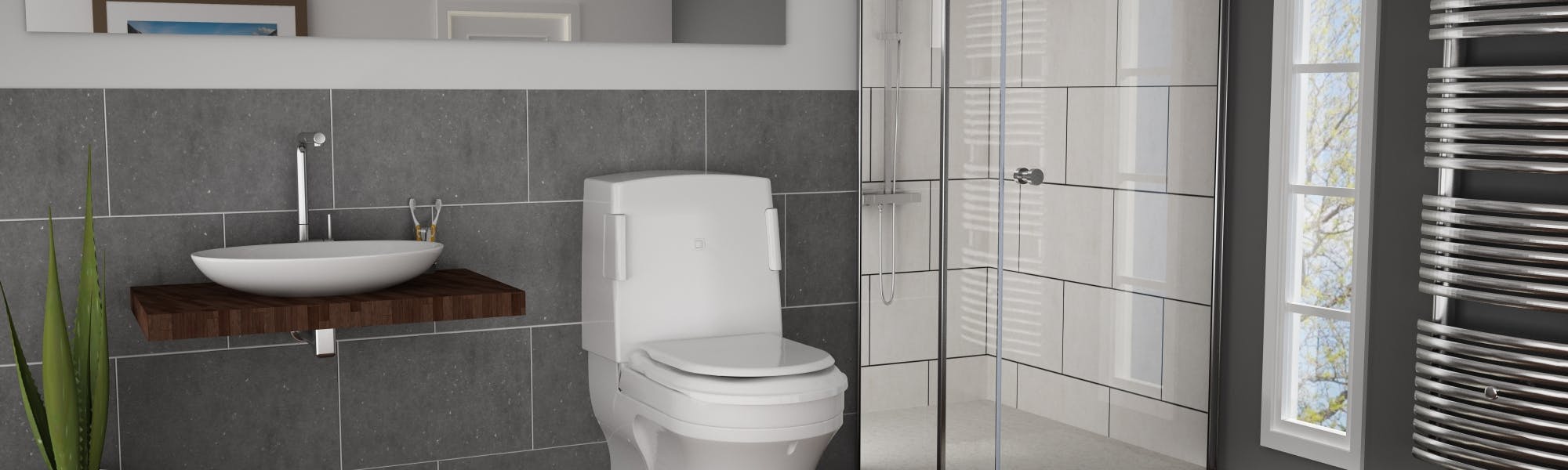
Powered toilets are designed for users with significantly reduced lower-body strength. These specialist systems gently lift or tilt the user into a standing position, helping make transfers safer and easier.

They are often recommended for individuals with severe mobility limitations or progressive conditions.

Powered toilet lifter seat designed to assist users with limited mobility

Disabled Toilet Lifters

Toilet lifters can be installed over an existing toilet and provide a lifting mechanism that assists users when standing up. They are often used as an intermediate solution for those who need additional support but may not yet require a full bathroom adaptation.

Height adjustable disabled toilet system with lifting support frame

Which Disabled Toilet Is Right For You?

Choosing the right disabled toilet depends on your mobility, physical ability and the level of support you require. The table below compares the different types of disabled toilets to help you identify the most suitable solution.

Toilet Type

Best For

How It Helps

Things To Consider

Raised height / high toilet

Mild to moderate difficulty sitting and standing

Reduces bending at the hips and knees

Height should suit the individual; works well alongside grab rails

Wash and dry toilet

Reduced dexterity, reach or balance

Washes and dries, reducing reliance on toilet paper or a carer

Requires an electrical supply near the toilet

Height-powered or tilt toilet

Significantly reduced lower-body strength

Raises or tilts the user towards a standing position

Requires power and professional installation

Toilet lifter

People requiring additional support before a full bathroom adaptation

Fits over an existing toilet to assist with standing

Quicker to install; sufficient space around the toilet is required

Not sure which disabled toilet is right for you? Our specialist team can recommend the most suitable option during a free home assessment.

More Ability, part of the Passmore Group, team outside the showroom, including specialist accessible bathroom designers and installers.

Essential Features of a Disabled Toilet at Home

Creating a safe and accessible toilet space often involves more than simply replacing the toilet itself. Our specialists consider the entire layout to ensure comfort, safety and ease of use.

Grab Rails and Drop-Down Arms
Provide additional support and stability when transferring on and off the toilet.

Accessible Layouts
Sufficient space is essential, particularly for wheelchair users or those using mobility aids. Our team can advise on appropriate disabled toilet dimensions to ensure safe and comfortable movement.

Emergency Pull Cords
Offer reassurance by allowing help to be quickly summoned if needed.

Slip-Resistant Flooring
Often recommended alongside accessible bathroom adaptations to help reduce the risk of slips and falls.

Helpful Disabled Toilet Guides

If you're researching disabled toilet solutions for your home, these guides may also be useful:

> Disabled Toilet Dimensions – Understanding layout requirements and how accessible toilets can work in domestic bathrooms.

> Disabled Toilet Accessories – A guide to grab rails, raised seats and other features that can improve safety and independence.

Why Families Trust More Ability

Choosing the right disabled toilet or accessible bathroom solution is about far more than selecting equipment. Every person’s mobility needs, home layout and level of support are different, which is why expert guidance is so important.

At More Ability, our experienced specialists take the time to understand your individual needs and design solutions that prioritise safety, comfort and independence. All of our disabled bathrooms and disabled toilets are designed and installed by teams who specialise in inclusive bathroom design and understand the practical challenges many people face at home.

We provide a complete end-to-end service, managing everything from your initial consultation and home survey through to bespoke layout design, product specification and professional installation. Throughout the process you’ll work with the same dedicated team, giving you reassurance and continuity from start to finish.

Customers often choose More Ability for our experience, attention to detail and personal approach. This is reflected in our 5-star Trustpilot reviews, and you can also explore real customer case studies to see how we’ve helped homeowners across Yorkshire create safer and more accessible bathrooms.

Disabled bathroom with disabled toilet, support rails and emergency pull cord

Disabled Toilet Case Studies:

Disabled Toilet | Huddersfield

Disabled Toilet FAQs

What Is The Best Disabled Toilet For The Home?

The most suitable toilet depends on the user’s mobility and level of support required. Comfort height toilets may suit those with mild joint pain, while powered tilt systems or wash-dry toilets are often recommended for people with more significant mobility or dexterity challenges. Our specialists help determine the most appropriate solution.

Are High Toilets Better For Elderly People?

For many older people, a high toilet can make sitting down and standing up easier by reducing the distance they need to bend and the strain placed on their hips and knees. When combined with appropriately positioned grab rails, a raised height toilet can provide additional support and stability. However, the correct toilet height varies from person to person, which is why we recommend a specialist assessment.

Are There Options With Wash Or Bidet Features?

Yes. Many disabled toilets include integrated washing and drying functions, helping users maintain hygiene independently without needing assistance.

Can A Disabled Toilet Be Fitted In A Small Bathroom?

Yes. Accessible toilet solutions can often be designed to work within compact spaces. During a home assessment we evaluate the room layout and recommend the most suitable configuration.

Do You Install Grab Rails With The Toilet?

Yes. Grab rails and drop-down support arms are often installed alongside disabled toilets to provide stability and support when transferring safely.

Can I Get Help Paying For A Disabled Toilet?

You may be eligible for financial assistance through a Disabled Facilities Grant (DFG) from your local council, usually following an occupational therapist assessment. If you have a qualifying disability or long-term health condition, you may also be eligible to have your disabled toilet supplied and installed VAT-free. For further information, read our guide to grants for disabled bathrooms and find out more about VAT exemption.

Do You Offer VAT Exemption On Disabled Toilets?

Yes. If you have a chronic illness or disability, you may qualify for VAT exemption on certain bathroom adaptations and equipment, including disabled toilets and installation.