How To Create A Wheelchair Accessible Bathroom | More Ability
Published: 25 November 2020 · Last Updated: 4 September 2025
Creating a wheelchair accessible bathroom involves more than just fitting a few grab rails. From layout planning and fixture selection to safety enhancements and design choices, there are a range of considerations that help ensure the space is safe, practical, and comfortable.
This article explores everything from layout and dimensions to fixtures, design ideas, costs and real-world examples, helping you make informed decisions when planning a wheelchair or handicap bathroom.
Wheelchair Accessible Bathroom Layout Considerations.
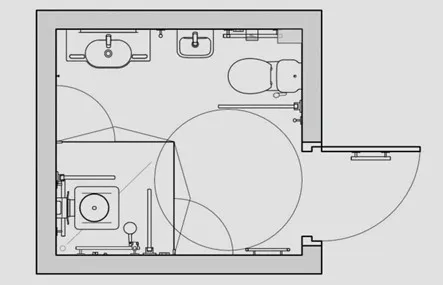
The foundation of a disabled bathroom is the layout. Following Document M guidance helps ensure safe, independent use. As a baseline, aim to:
- Provide a turning circle of at least 1500mm x 1500mm for full wheelchair rotation.
- Use outward-opening doors (or sliding/pocket doors) to free internal space.
- Keep doorways 32 inches (813mm) wide or more for standard wheelchair access.
- Maintain clear transfer zones next to toilets and basins.
Position switches, storage & accessories so they can be reached from a seated position.
A disabled bathroom layout should prioritise independence, safety and ease of movement, whether used by one person or shared by multiple family members.

Essential Fixtures for a Wheelchair Friendly Bathroom.
Choosing the right fixtures is key to creating a safe, practical and stylish wheelchair friendly bathroom. Each fixture should support independence while blending seamlessly into the overall design.
Wheelchair Accessible Showers:
A wheelchair accessible shower provides a safe and practical bathing solution without the need for a full remodel. These showers are designed with level-access trays that remove the need to step up, non-slip flooring to reduce the risk of slips, and wide outward-opening doors for easy access. Spacious interiors ensure there’s room for comfortable manoeuvring, whether independently or with carer support.
Disabled Wet Rooms:
A disabled wet room transforms the entire bathroom into a showering space, offering both convenience and modern style. With fully waterproof accessible wallboards and anti-slip vinyl flooring, wet rooms are easy to clean and maintain. The open-plan design allows wheelchair users to enter and move freely, with enough space for carers if needed. Disabled wet rooms also allow you to future-proof your home, making them a popular choice for long-term accessibility.

Disabled Toilets:
Disabled toilets make a significant difference facilitating comfort, independence and ease of use.
Raised height toilets help reduce the strain of sitting and standing, while wash & dry toilets combine cleaning and drying functions at the touch of a button for improved hygiene. These toilets can also be paired with folding grab rails to provide extra safety during transfers from wheelchair to toilet seat.

Disabled Basins:
Disabled basins are designed to make daily routines more comfortable and manageable.
Rise-and-fall adjustable basins allow the user (or multiple users in one household) to set the height at the touch of a button. Concave or curved basin designs bring taps and surfaces closer, reducing the strain of reaching. Many models also include optional grab bars to give added reassurance and stability.

Safety Enhancements for Handicap Bathrooms.
Safety is critical when adapting a bathroom. The right features reduce risk, make movement easier and support independent use. Below are the most effective accessible bathroom design upgrades and what to consider for each.
Grab Rails:
Fit horizontal rails near the toilet for seated transfers and vertical rails at shower entrances for balance as you enter/exit. Consider contrasting colours (e.g., white rails on darker walls) to improve visibility. Stainless steel and antimicrobial finishes are hard-wearing; ensure rails are secured into solid backing, not just plasterboard.
To find out more about the options available read our dedicated grab rails buying guide.

Fold-Down Shower Seats:
Choose cushioned, arm-supported seats that fold away to maximise space. Wall-mounted options save floor area and can be positioned at a comfortable height for the primary user; add a nearby grab rail to aid the sit-to-stand movement.

Non-Slip Flooring:
Anti-slip vinyl or textured slip resistant tiles provide traction in wet areas. For disabled wet rooms, specify a gentle gradient to the drain to avoid pooling water and keep thresholds level for easier wheelchair entry.

Emergency Pull Cords:
Place a pull cord within reach from the shower seat and the WC, with a reset switch at a reachable height. Consider linking to a local alarm or smart device for added peace of mind where appropriate.
Accessible Brassware & Fixtures:
When it comes to accessible brassware, thermostatically controlled mixers maintain safe temperatures while lever handles/taps are easier to use when grip may be limited. In addition, large, easy-read dials are more accessible than small knobs and there are always options to explore touch free-senor or voice activate controls.
Accessible Lighting:
Bright, even lighting with minimal glare, colour contrast between floors, walls and fixtures all help judge distances while keeping pathways clear and storing toiletries within easy reach to reduce bending and over-reaching all help improve safety.
Wheelchair Bathroom Dimensions.
When it comes to wheelchair bathroom dimensions, accurate measurements ensure practicality and compliance. The figures below are commonly used benchmarks; your exact layout should be tailored to the wheelchair user’s needs and the property’s constraints.
> Doorway width: minimum 32 inches (813mm). Wider openings make access easier, particularly for larger wheelchairs.
> Thresholds: keep flush wherever possible for level access. In showers, avoid lips/steps.
> Turning circle: 1500mm x 1500mm clear floor area for a full 360° turn.
> Toilet transfer space: aim for 750mm of clear space to one side of the toilet for lateral transfers.
> Basin approach: allow frontal clearance so a wheelchair can roll under the basin comfortably; avoid pedestal bases that block knee space.
> Showering space: level-access trays or wet room areas typically work best at generous sizes (e.g., 1200mm x 900mm or larger) to accommodate a chair and carer if required.
Treat these as starting points; a home assessment ensures heights and clearances are set precisely for the primary user.
Wheelchair Bathroom Design Ideas.
Accessibility doesn’t mean compromising on style. Thoughtful material choices and layout details can deliver a disabled bathroom suitable for a wheelchair user that is both beautiful and practical.
> Modern Finishes: Use maintenance-free accessible wall boards for a sleek, grout-free look and easy cleaning. Gloss or matt vanity fronts, frameless screens and LED mirrors create a contemporary look and feel.
> Classic Looks: Pair shaker-style cabinetry with brushed brass or chrome fittings. Warm neutrals and stone-effect surfaces provide timeless appeal while remaining easy to maintain.
> Multi-User Flexibility: Rise-and-fall basins or modular accessible storage can be adapted for differing heights and needs while removable shower screens/doors and seats, accompanied by repositionable grab rails help increase safety of the bathroom on an as and when needed basis.
> Storage & Reach: Choose drawers over deep cupboards and keep everyday items between mid-thigh and shoulder height. Open alcoves, niches or pull-down shelves reduce the need to stretch making the space accessible for all.
> Comfort Features: Underfloor heating dries floors quickly and keeps surfaces warm. Quiet extraction fans and good ventilation reduce condensation and improve air quality.
If you want to find out more, read our dedicated article for design tips for disabled bathrooms.
The above is a finished design and installation of a disabled wet room transformation we recently completed for a client. Find out more and read the full case study.

Cost of a Handicap Bathroom.
The overall cost of a disabled bathroom depends on the size of the room, the extent of structural work, product choices and the extent of plumbing and electrical work needed.
Use the ranges below as a guide and starting point only. For exact budgets it is always best practice to arrange a free wheelchair bathroom design appointment.
1. Minor adaptations (up to £1000): grab rails, raised toilet seats, lever taps, simple lighting changes.
2. Mid-level adaptations (£3,500–£6,500+): shower conversions to level-access, raised-height toilets, accessible basins, new wall boards and safety flooring.
3. Full remodels (£7,000+): complete wet rooms with drainage works, full-height wall boards, anti-slip flooring, thermostatic controls, ventilation and storage upgrades.
|
Category
|
Cost Range
|
Typical Adaptations
|
|
Minor adaptations
|
Up to £1,000
|
Grab rails, raised toilet seats, lever taps, simple lighting changes
|
|
Mid-level adaptations
|
£3,500 – £6,500+
|
Shower conversions to level-access, raised-height toilets, accessible basins, new wallboards, safety flooring
|
|
Full remodels
|
£7,000+
|
Complete wet rooms with drainage works, full-height wall boards, anti-slip flooring, thermostatic controls, ventilation, storage upgrades
|
Funding support may be available depending on your circumstances. To understand what help you may be entitled to, including VAT exemption and disabled facilities grants, this page explains the available funding options in more detail.
Wheelchair Accessible Bathroom Case Studies.
Every wheelchair accessible bathroom adaptation project we design and fit as part of our fully project managed service is centred around providing the most suitable bathing solution to meet the individual needs and requirements of the person using it.
Our case studies share real client projects, showcasing the thoughtful designs and clever wheelchair bathroom adaptations that have helped improve the day-to-day life of end users, their friends and their family alike.
To read more, visit our dedicated section for customer case studies.

How More Ability Can Help.
More Ability, part of the Passmore Group, is Yorkshire’s only 5* rated bathroom adaptation company. Specialising in accessible, mobility and disabled bathroom solutions, we are extremely proud of the exceptional service we continuously deliver — from design right through to installation and aftercare.
Whether you want a future-proofed solution or require a more specialist adaptation in order to remain independent at home, More Ability can help create a safe space to bathe for you or your loved ones.
You can either book a free design appointment online, visit one of our showrooms, or call to speak to a friendly member of our team.
Frequently Asked Questions.
How to make a wheelchair accessible bathroom?
Start with a safe layout that allows a 1500mm x 1500mm turning circle, outward-opening doors, and clear transfer zones. Add accessible bathroom design fixtures such as showers, toilets, and basins.
What are the specifications for a wheelchair accessible bathroom?
According to Document M guidance, specifications include:
- Door width: minimum 32 inches (813mm)
- Clear floor space for turning: 1500mm x 1500mm
- Transfer space beside toilets and basins
How do you get from a wheelchair to a toilet?
Position the toilet with at least 750mm of clear transfer space to one side. Use raised height toilets with folding grab rails to support the transfer.
What does a disabled bathroom need?
At minimum: level-access showering, non-slip flooring, grab rails, an accessible toilet, and an appropriately placed basin. Additional safety features like thermostatic controls and emergency pull cords improve usability.
What size is a wheelchair accessible toilet?
A typical wheelchair accessible toilet is taller than standard (around 450–480mm seat height) and positioned with enough side clearance for transfers.
What is the difference between a regular toilet and a handicap toilet?
A regular toilet sits lower, usually around 15–17 inches, making transfers harder. A handicap toilet (also called raised height or comfort height) is taller, easier to access from a wheelchair, and often paired with support rails.
Share this Post


