Disabled Shower Room Layouts | Dimensions, Heights & Regulations
Published: 11 September 2019 · Last Updated: 23 February 2026
Disabled Shower Room Layout
Designing a disabled shower room layout requires careful planning. Whether you’re creating a compliant facility in a public building or adapting a bathroom at home, layout, dimensions and disabled shower height positioning all play a critical role in ensuring safety, accessibility and independence.
In commercial settings, strict regulations apply under Approved Document M (Doc M) of the Building Regulations. In private homes, these standards are not mandatory — but they provide a valuable benchmark for safe and practical design.
This guide explains Doc M shower room layout requirements, disabled shower height regulations and how layouts can be adapted successfully in private bathrooms whether a small disabled wet room or disabled shower room is preferred.
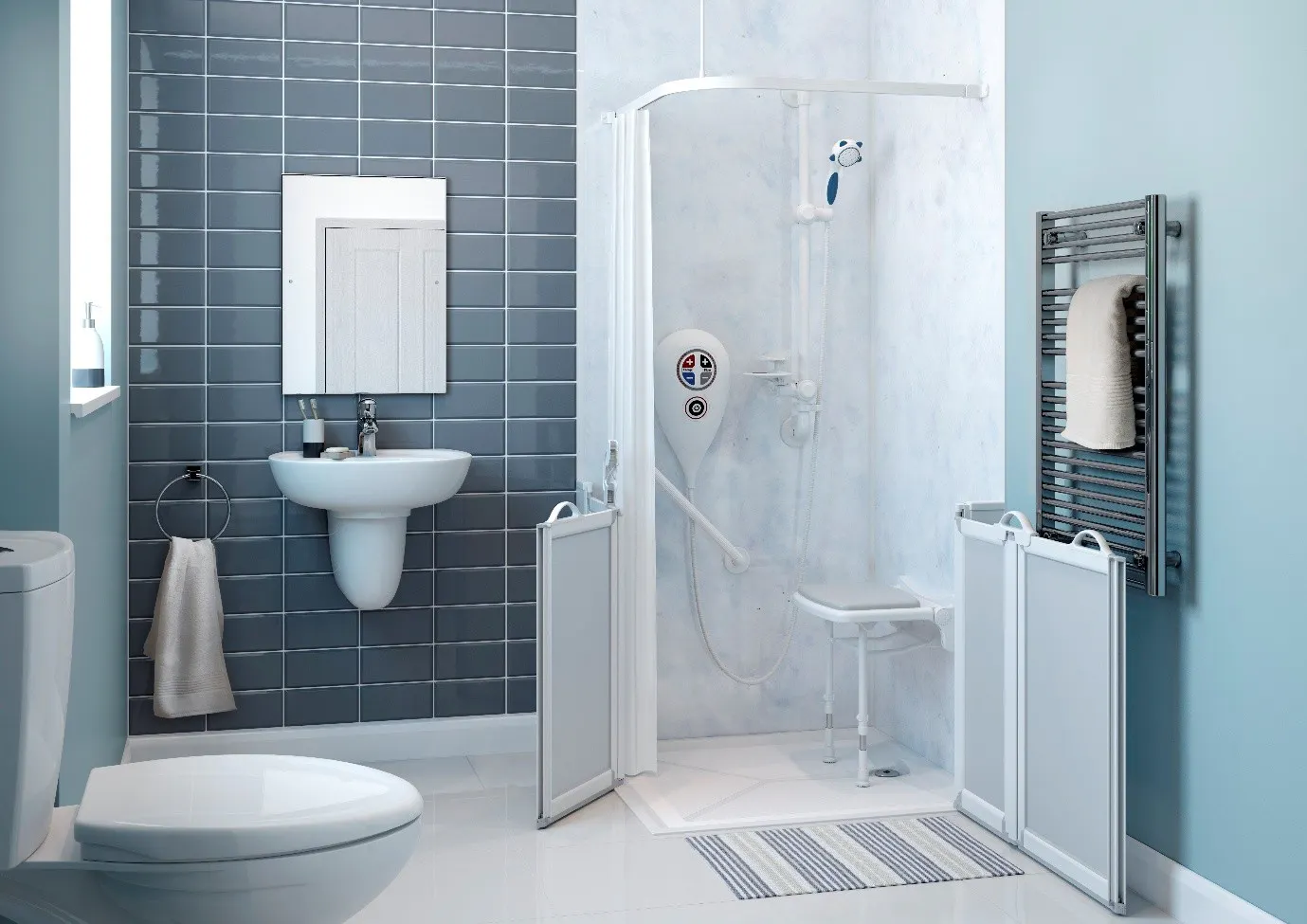
What Are The Disabled Shower Room Regulations (Doc M)?
For commercial properties and public buildings, disabled shower facilities must comply with Approved Document M (Doc M).
A compliant Doc M shower room layout ensures the space is accessible for wheelchair users and those with limited mobility. These regulations are prescriptive, meaning dimensions, fixture positioning and disabled shower height regulations must follow defined measurements to achieve full compliance.
Standard Doc M Disabled Shower Room Layout Dimensions
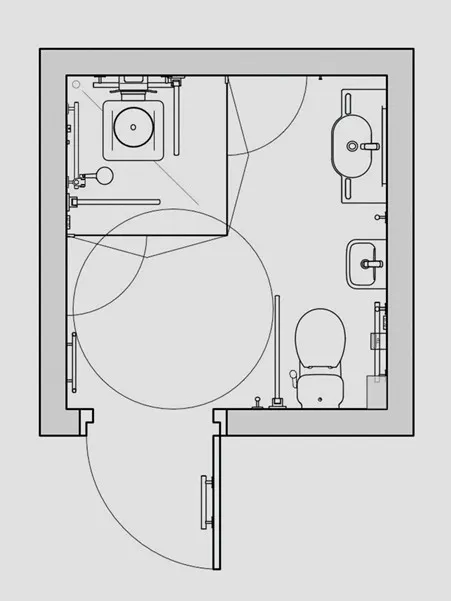
1. A disabled shower room or changing room must measure 2200mm deep by 2000mm wide.
2. If the room includes a WC, dimensions increase to 2500mm long by 2400mm wide.
These measurements allow for wheelchair turning space, safe lateral transfers and appropriate fixture positioning.
Because Doc M is prescriptive, layouts are not flexible in commercial environments. The WC, basin, grab rails, shower seat and control heights must meet defined standards.
Key Layout Requirements (Doc M Checklist)
A compliant Doc M shower room layout must include:
Doors
> Outward opening access door
> Horizontal closing bar fitted internally
Seating
> Wall-mounted fold-down shower seat
Safety
> Emergency assistance alarm system reachable from floor level
Visual Contrast
> Grab rails specified in a contrasting colour (often blue against white)
Controls
> Both fixed and adjustable shower heads
Doc M compliance ensures accessibility, dignity and independence in public environments.
Disabled Shower Height Regulations
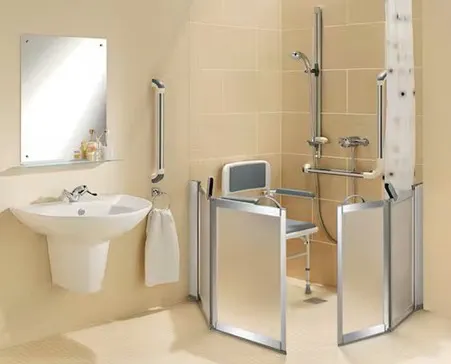
Within a Doc M shower room layout, disabled shower height positioning is just as important as overall floor dimensions. Approved guidance standardises heights to ensure usability for the widest range of people.
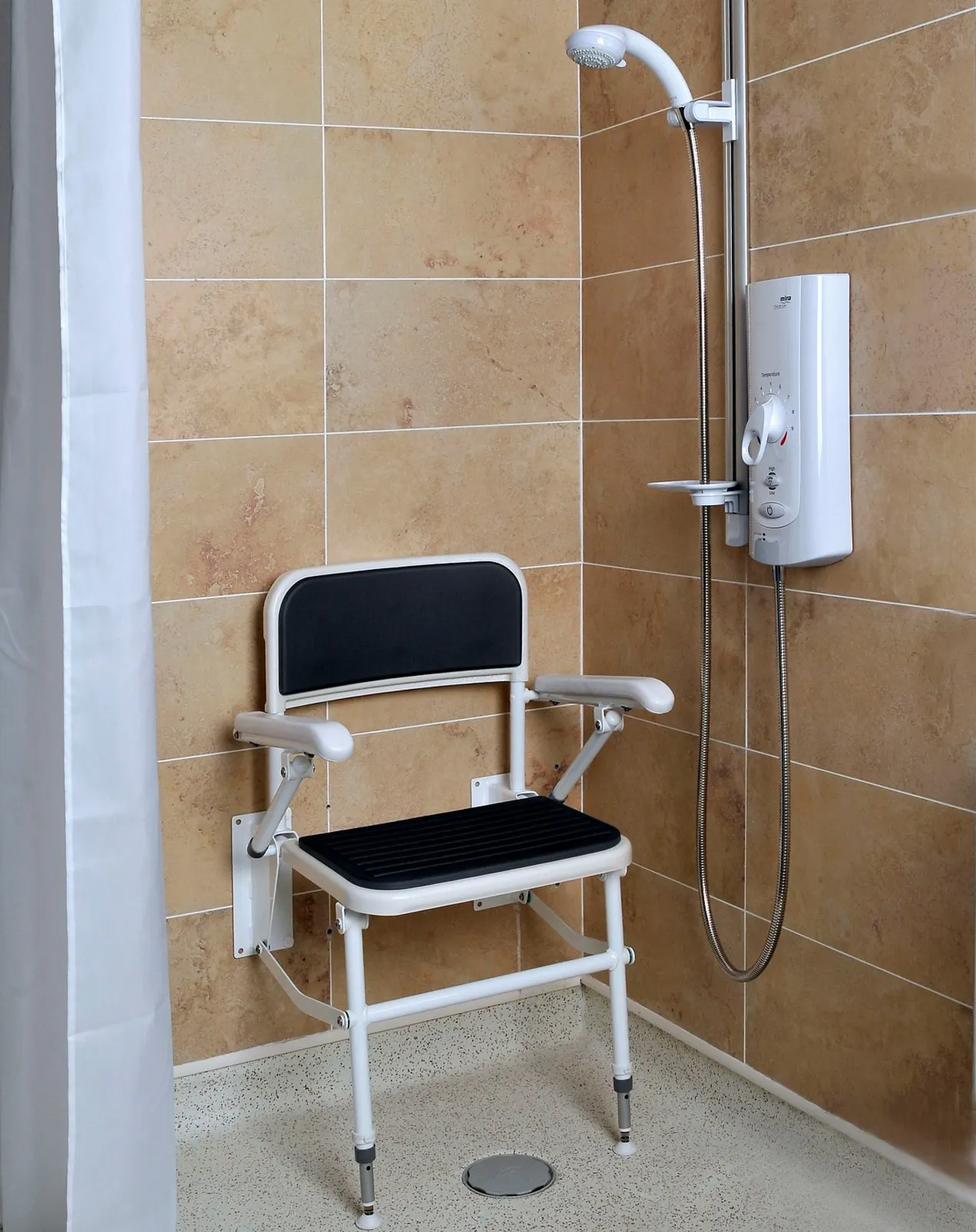
Shower Seat Height
The standard disabled shower height for a wall-mounted seat is typically 480mm from finished floor level. This supports safe wheelchair transfers and comfortable seated showering.
Shower Control Height
Controls should be usable from a seated position and are generally installed between 750mm and 1000mm from floor level. They should be easy to grip and operate, particularly for users with reduced dexterity.
Grab Rail Heights
A well-designed disabled shower layout includes:
> Horizontal grab rails beside the shower seat
> Vertical rails to assist standing movement
> Support rails near the entrance
In commercial settings, these heights must align with Doc M standards. In private homes, they can be adjusted to suit the individual user while still following best practice for safety.
Private Home vs. Commercial Requirements
Whether you choose a disabled wet room or a disabled shower room, both significantly improve safety and independence when bathing at home.
In commercial buildings, a disabled shower room layout must fully comply with Doc M and follow a fixed layout. In a private home strict commercial dimensions are not legally required however it is essential the designed disabled shower room or disabled wet room does not compromise safety over aesthetics. That said, Doc M provides a strong benchmark for:
- Safe transfer space
- Suitable disabled shower height positioning
- Grab rail placement
- Wheelchair manoeuvring
The key difference in residential bathrooms is flexibility. Full commercial dimensions may not fit in smaller UK homes, which is where professional design becomes essential.
At More Ability, we specialise in designing and installing disabled shower room adaptations for private homes. Every project is tailored to the individual — because no two mobility needs, homes or families are the same.
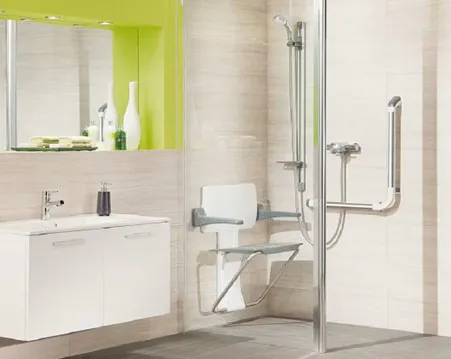
Disabled Wet Rooms
A disabled wet room converts the entire bathroom into a shower room. The floor is fully waterproofed and gently graded towards a drain.
This approach:
- Maximises usable floor space
- Removes trip hazards
- Improves wheelchair and walking aid access
Disabled wet rooms are often ideal where space is limited and flexibility is required.
Disabled Shower Rooms
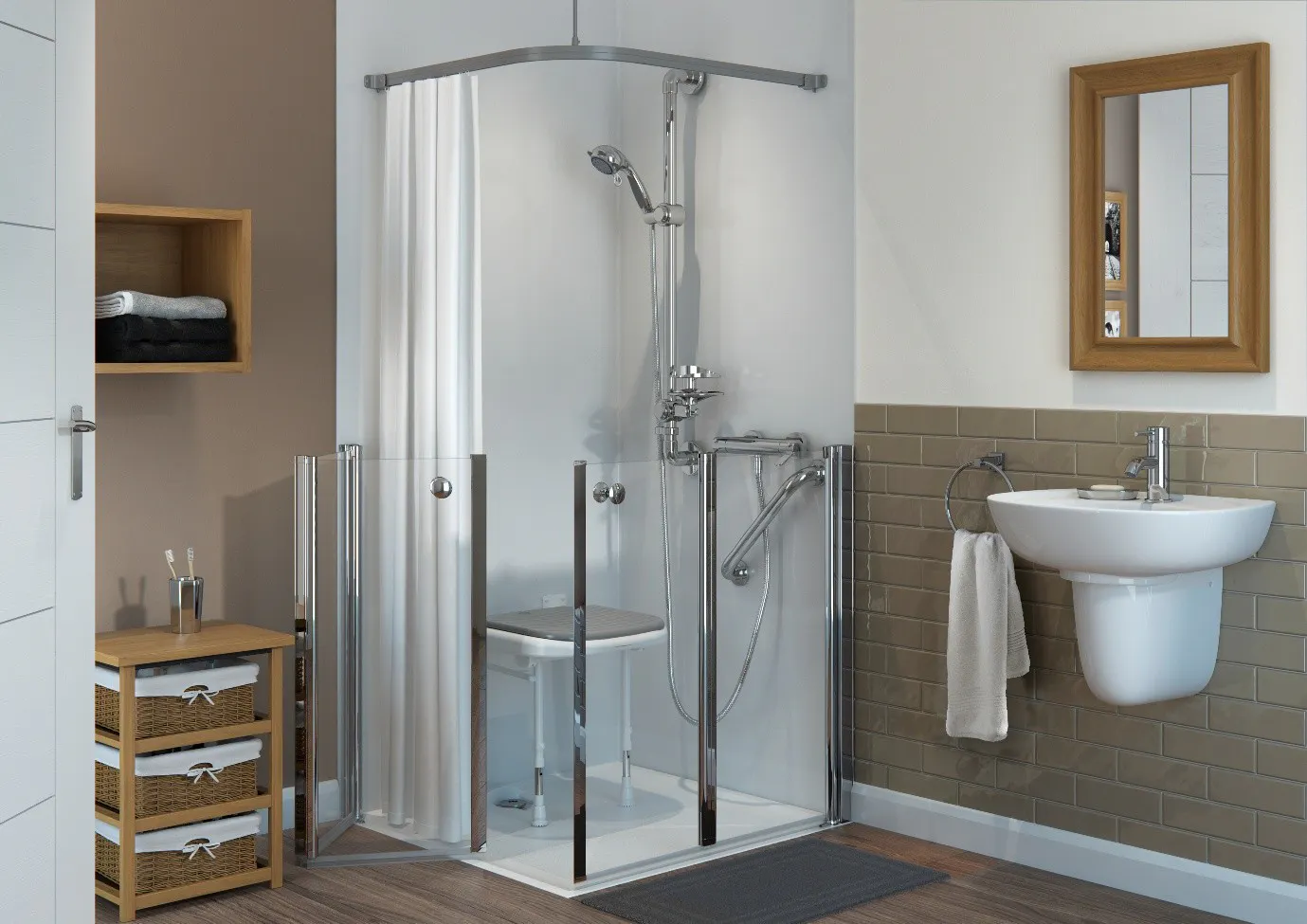
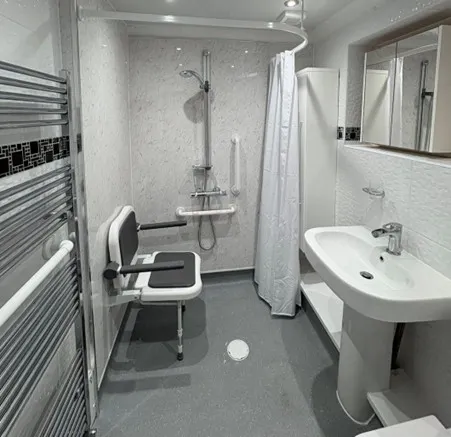
A disabled shower room incorporates a slip-resistant level access tray recessed into the floor, eliminating the need to step over a threshold while still defining the shower area.
Options include:
- Wide access layouts
- Carer-assisted layouts
Both allow walk-in, wheel-in or mobility aid entry. If you’re considering enclosed options, our guide to choosing a shower cubicle for disabled users explains available configurations in more detail.
Choosing between a disabled wet room and a tray-based disabled shower room depends on mobility needs, room dimensions and long-term requirements.
What’s The Ideal Disabled Shower Room Layout?
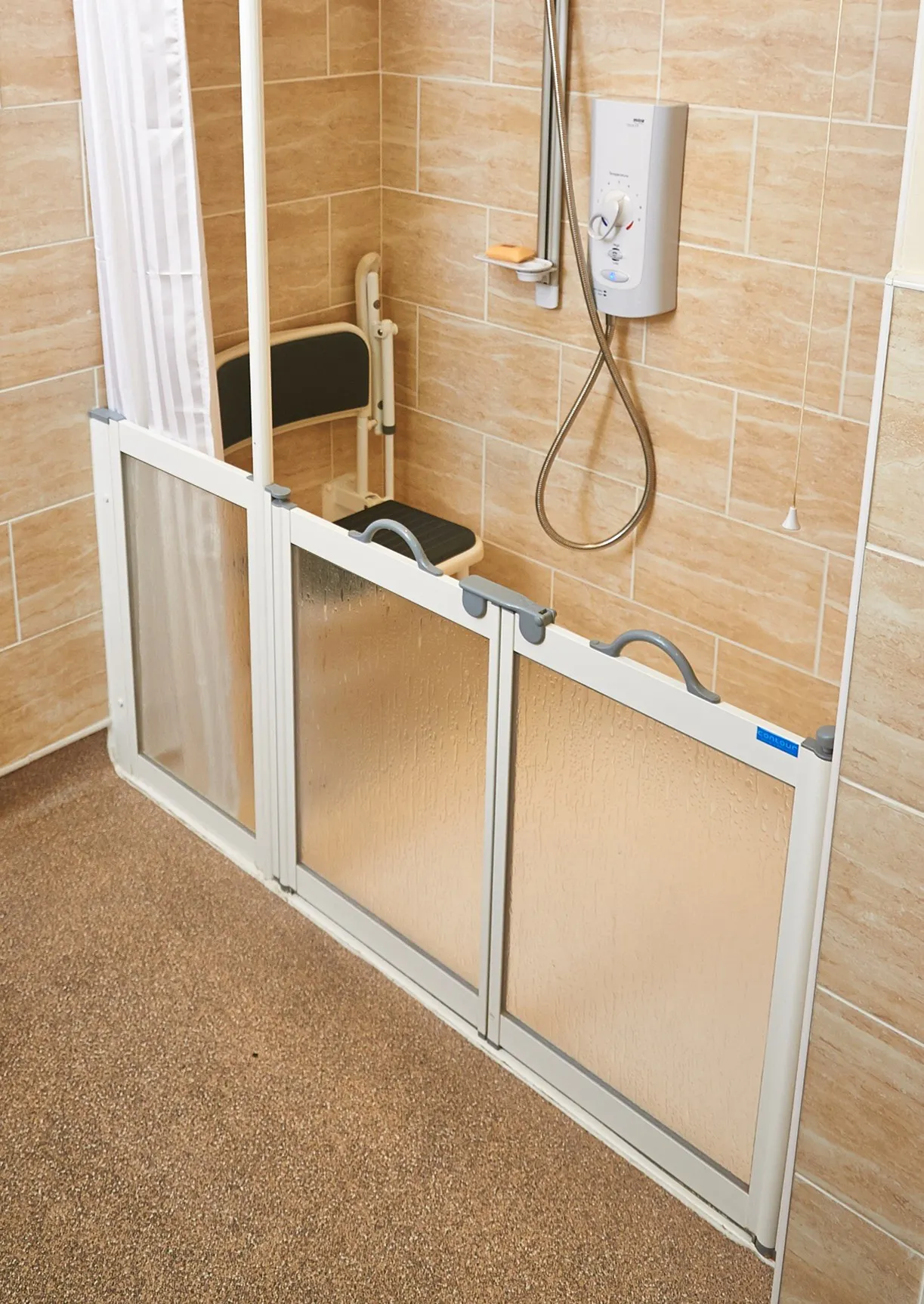
An effective disabled shower room layout prioritises safety, usability and independence.
A well-designed disabled shower room should include:
- A level-access shower area
- Fold-down wall-mounted seating
- Correctly positioned grab rails
- Wheelchair-accessible basin placement
- Adequate manoeuvring space
- Slip-resistant flooring
In commercial buildings, positioning must align with a Doc M. In private homes, layouts can be adapted to suit individual height, transfer method and mobility level.
If you’re planning a wider redesign, you may find our guide on how to create a wheelchair accessible bathroom helpful, as it explains broader accessibility considerations beyond the shower area.
Small Disabled Wet Room Layouts
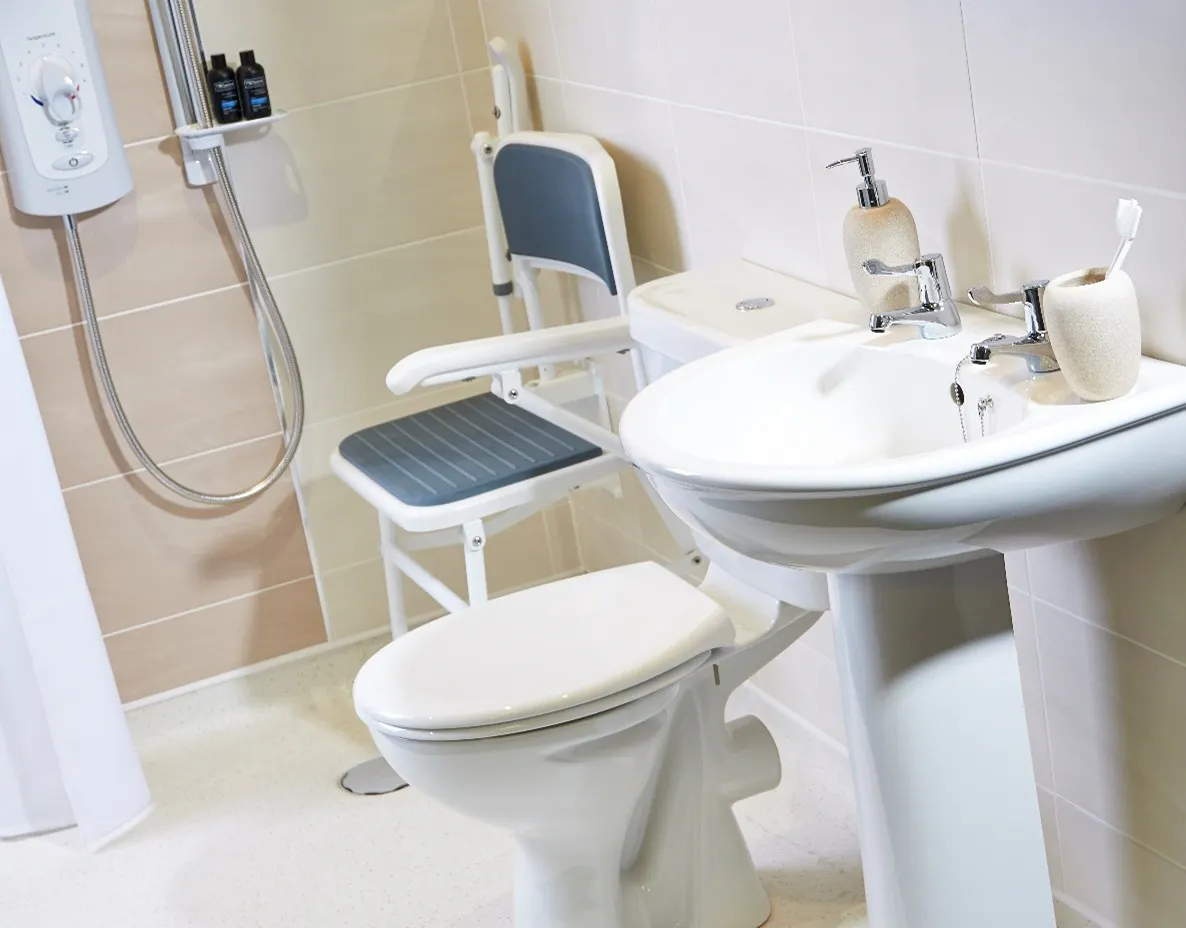
Many homeowners look for guidance on designing a small disabled wet room layout, particularly in compact residential bathrooms where space is limited.
Standard Doc M dimensions often exceed what is physically possible in a typical UK home. However, with intelligent design and careful fixture positioning, a small disabled wet room layout can still provide safe access, practical showering and long-term independence.
In smaller bathrooms, the priority is maximising clear floor space. Wheelchair users ideally benefit from a 1500mm turning circle, but where this cannot be fully achieved, layouts should focus on keeping the central area open and free from obstructions. Wall-hung basins and WCs, minimal thresholds and well-positioned drainage all help create better manoeuvrability within tighter footprints.
By removing raised trays and fully waterproofing the floor, the entire room becomes usable space — improving wheelchair and walking aid access while reducing trip hazards. For further practical layout inspiration and configuration ideas, see our guide to wet room ideas for disabled people.
Disabled Wet Room vs Disabled Shower In Smaller Spaces
In compact bathrooms, a disabled wet room often works better than a tray-based disabled shower room layout because:
- The entire floor becomes usable space
- There are no raised thresholds
- Drainage can be positioned more flexibly
That said, a recessed level access tray can also work effectively when properly designed.
To improve functionality in smaller layouts, whether you opt for a disabled wet room or disabled shower room, space saving design features work effectively, with consideration given to the following during the design phase:
- Use of wall-hung basins and WCs
- Installation of outward-opening or sliding doors
- Full assessment of used mobility aids, including widths, to ensure ease of access.
With professional help and advice, even the most modest spaces can accommodate a safe and practical disabled shower room or wet room.

How More Ability Can Help
Designing a disabled shower room or disabled wet room isn’t just about measurements — it’s about creating a safe, usable, space that offers peace of mind and independence.
At More Ability, we specialise in disabled bathroom adaptations and pride ourselves on delivering a unique experience, carefully tailoring each solution to the individual, their needs and requirements.
Providing a full disabled bathroom design and installation service, we manage your project from concept to completion, meaning you won’t need to interpret regulations yourself — we handle everything, ensuring your disabled bathroom is safe, practical and beautifully finished.
If you’re considering a disabled shower room or disabled wet room, book your free design appointment today and speak with a specialist who understands the importance of designing a disabled bathroom fit for you and your home.
FAQs
What is the minimum size for a disabled shower room layout?
For commercial Doc M compliance, the minimum size is 2200mm x 2000mm, increasing if a WC is included. In private homes, smaller layouts are often achievable with careful planning.
What is the standard disabled shower height?
The standard disabled shower seat height is approximately 480mm from floor level, with controls typically positioned between 750mm and 1000mm.
Do disabled shower height regulations apply in private homes?
They are mandatory in commercial buildings under Doc M. In private homes, they are not legally required but following recommended guidance ensures safer design.
Can you install a small disabled wet room layout in a compact bathroom?
Yes. With intelligent layout planning, drainage positioning and appropriate fixtures, a small disabled wet room layout can often be achieved in standard UK bathrooms.
What is a Doc M shower pack layout?
A Doc M shower pack layout is a predefined commercial configuration designed to meet Approved Document M accessibility standards, including room dimensions, disabled shower height positioning and grab rail placement.
Share this Post